The first thing my sister tried to take was my home.
The second was my identity.
But the third was something I could never recover.
When I discovered who had helped her, I realized my family had been hiding something far more disturbing than betrayal.
It began on a beautiful October Saturday inside my lakefront condominium, a property I’d spent seven years paying for.
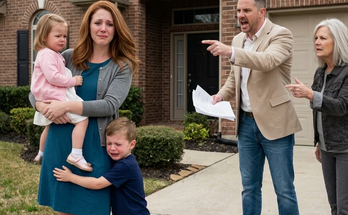
My older sister, Lydia, stood in my living room wearing an expensive cream pantsuit, holding a clipboard while deciding which bedrooms my brother’s children would occupy.
She didn’t know I was outside the door with my husband and our two little daughters.
“What a gorgeous layout!” Lydia exclaimed.
“Daniel’s boys will love it. The guest wing is perfect, and the family can move in on Friday.”
My brother replied quietly.
Lydia laughed.
“Oh, please. Mara never comes here anyway. She probably wouldn’t even notice if we changed the locks.”
Beside me, Owen went still.
Our six-year-old daughter, June, looked up at him.
“Mommy,” she whispered, “why is Aunt Lydia giving away our house?”
I had no answer.
I was wondering the same thing.
Owen unlocked the door.
When we entered, I watched my older sister lose her usual confidence for the first time in thirty-eight years.
“Mara?”
Her gaze moved from Owen to June, then to three-year-old Sadie, who held her stuffed rabbit tightly.
The clipboard dropped toward her waist.
“Who… who are these people?”
I walked inside.
“My family.”
Lydia stared.
Daniel stood motionless near the windows overlooking Lake Oswego. His wife, Leah, lowered her measuring tape while their three boys stopped exploring.
June smiled proudly.
“That’s my daddy, and this is my sister Sadie. Mommy said we could watch the boats!”
Lydia looked stunned.
“WAIT. YOU’RE MARRIED?”
“Yes.”
“Since when?”
“Eight years ago.”
“Eight YEARS?”
I nodded.
“And apparently, during those eight years, you’ve also developed the authority to give away property that doesn’t belong to you.”
Her expression tightened.
“Mara, don’t start.”
Those words revealed everything.
She wasn’t sorry or em.bar.ras.sed. She was annoyed that I’d interrupted her arrangements.
Then I noticed cardboard boxes stacked against my walls.
Lydia hadn’t come seeking permission.
She intended to move someone into my home.
And I had no idea how much further her plans extended.
My name is Mara Ellis.
I was thirty-eight, a commercial real estate attorney living in Seattle with Owen and our daughters.
Our life was comfortable but ordinary.
We owned a modest Craftsman house with an uneven porch, an aging maple tree, and children’s toys scattered across the backyard.
Owen worked as a structural engineer.
He examined buildings the way others studied faces, noticing hidden weaknesses before they became obvious.
I loved that about him.
He understood that something could appear perfectly stable while serious problems developed beneath the surface.
My family was the clearest example.
Seven years earlier, I’d purchased the Lake Oswego condominium for $340,000 using my savings.
I’d worked long hours, skipped vacations, and driven an aging Honda until it finally stopped running.
Throughout those years, I studied property markets determined to prove that my childhood limitations didn’t define my future.
The condominium featured floor-to-ceiling windows, hardwood floors, a beautiful kitchen, and breathtaking lake views.
Summer sunlight shimmered across the water. Autumn painted the surrounding trees gold, while winter fog covered the lake in soft gray.
It was my first home purchased entirely through my own efforts.
To me, it represented independence and years of determination.
My relatives saw something different.
Lydia, the eldest, was polished, competitive, and remarkably confident.
She worked in real estate, drove expensive vehicles, and could make an ordinary house sound like a luxury mansion.
Our mother, Lorraine, adored her.
Every achievement Lydia made became a family celebration.
Our younger brother, Daniel, seemed quieter and more practical.
He managed a delivery fleet, worked long hours, and avoided arguments.
Everyone considered him dependable and hardworking.
I was different.
I was the supposedly difficult middle child who read constantly, questioned everything, and refused to accept other people’s expectations.
After law school, Mom wondered why I’d spent so many years studying instead of getting married.
When I passed the bar examination, Lydia questioned whether it was actually difficult.
And after I purchased the condominium, she smiled.
“Well, Mara, I guess miracles really do happen.”
Eventually, I stopped sharing my achievements.
Then I stopped sharing almost everything.
Owen and I married in 2018 during an intimate ceremony overlooking Puget Sound.
Twenty-two guests attended, including close friends and his parents from Colorado.
My family received invitations, but after several uncomfortable conversations, none attended.
Mom called the ceremony inconvenient. Lydia criticized its privacy, while Daniel mentioned a scheduling conflict.
I attempted to reconnect afterward, but our conversations repeatedly became criticism or questioning.
When June arrived in 2020, I announced her birth.
Mom responded three weeks later, explaining how busy everyone had been.
I eventually stopped reaching out.
By Sadie’s birth, Owen and I had built a peaceful family life that I wanted to protect.
I knew my choices weren’t perfect.
Still, maintaining distance seemed healthier than repeatedly exposing my children to unpleasant family conflicts.
For years, it worked.
Until that October Saturday, when my relatives apparently mistook my silence for consent.
“Everybody needs to calm down,” Lydia announced.
Her voice carried the same authority she used when directing junior agents.
I stared at her.
“You brought moving boxes into my home.”
“Because Daniel needs somewhere to live.”
“Then Daniel should have called me.”
My brother rubbed his neck.
“Our landlord sold the house,” he explained. “We have to move out by the end of the month.”
Leah looked uncomfortable.
“Lydia said you had agreed to let us stay here temporarily.”
“I never agreed to anything.”
Daniel frowned.
“She told us you’d signed the paperwork.”
Silence filled the room.
I faced Lydia.
“What paperwork?”
She dismissed my concern with a gesture.
“Nothing complicated. Just an occupancy agreement.”
“Then show it to me.”
Her confidence faltered.
“Mara—”
“Show me.”
She tightened her grip on the clipboard.
“It’s already handled.”
I moved closer.
“Lydia, I’m a real estate attorney. If you’ve prepared legal documents involving my property, you are going to show them to me. Right now.”
For the first time, genuine concern crossed her face.
Before she responded, Leah spoke.
“Lydia, you told us Mara signed everything last week.”
I felt a sudden chill.
“Last week?”
Daniel nodded.
“She said the condo was being transferred into the family trust.”
I stared at him.
“What family trust?”
Lydia had no answer.
Owen stepped beside me.
He’d already settled June and Sadie at the kitchen counter with coloring books.
His voice remained controlled.
“Hand her the clipboard, Lydia.”
Something in his tone persuaded her.
She handed it over.
The first page read:
TEMPORARY FAMILY OCCUPANCY AGREEMENT.
It listed my full name, property address, Daniel and Leah’s names, and a six-month occupancy period.
There was no rent or security deposit.
Near the bottom appeared my signature.
But I had never signed that document.
The following page supposedly authorized the Ellis Family Continuity Trust to manage and transfer my property.
My name appeared again, accompanied by a declaration that I was unmarried and had no dependent children.
I looked directly at Lydia.
“Lydia.”
She swallowed.
“What?”
“Why does this document say I’m single?”
“Because… because that’s what we understood.”
“You didn’t ask.”
“You never told us otherwise!”
“And why does it say I have no children?”
She couldn’t answer.
I glanced at Owen.
His expression was unusually still.
Then I examined the final page.
It contained a trust amendment, supporting certification, and notarial acknowledgment.
Beneath the words Settlor and Trustee appeared a familiar signature.
Thomas R. Ellis.
My father.
For several seconds, everything around me seemed distant.
I recognized the handwriting from childhood birthday cards.
The distinctive capital T and long finishing stroke were unmistakable.
I’d seen that signature countless times.
My hands tightened around the documents.
“Lydia,” I whispered, “where did you get this?”
She glanced toward Daniel.
He avoided my eyes.
I checked the date.
September 29, 2026.
Three weeks earlier.
Then I examined the signature again.
Something felt terribly wrong.
My father had passed away in October 2019.
Seven years earlier.
Yet his name appeared on a document supposedly signed just three weeks ago.
Someone had apparently used his signature.
And my family seemed to expect that I wouldn’t notice.
Dad had been the only person in our household who sometimes made me feel that my opinions mattered.
His name was Thomas Ellis.
He’d worked in mortgage compliance and title examination for thirty-five years.
He wasn’t wealthy or especially expressive, but he valued accurate records.
At twelve, he taught me to read property deeds. At sixteen, he explained mortgages and liens.
When I announced my ambition to become an attorney, he encouraged me instead of laughing.
He bought me a secondhand leather briefcase.
Inside was a handwritten note.
Never let anyone convince you that you don’t belong in a room you’ve earned the right to enter.
I still kept that briefcase in my Seattle office.
Unfortunately, Dad and I had grown distant during his final year.
His behavior changed.
He became distracted and increasingly concerned about things he wouldn’t fully explain.
He avoided family dinners and occasionally called late at night with questions about Lydia’s real estate business.
Once, he asked whether I’d permitted anyone to use my professional credentials for a property transaction.
I said absolutely not.
He sounded relieved.
Then he asked about my credit reports.
I became impatient.
“Dad, I’m thirty-one. I know how to protect myself.”
“I know you do, sweetheart.”
“Then why are you asking?”
He paused.
“Because not everyone who knows your name deserves your trust.”
At the time, I dismissed his concerns.
Mom repeatedly claimed Dad had become overly suspicious about finances.
She suggested he’d made questionable investments.
Lydia regularly dismissed his worries, while Daniel grew unusually quiet whenever the subject arose.
Then, in October 2019, Dad passed away following a single-vehicle accident on a rainy highway outside Salem.
Mom explained that he’d lost control of his car.
The funeral arrangements happened quickly, and the casket remained closed.
I was heartbroken.
But my grief carried another burden.
Dad had called the evening before the acc!dent.
I’d been preparing for an important client meeting and hadn’t answered.
He left a voicemail.
His voice sounded exhausted.
“Mara, sweetheart, I need to tell you something. It’s important.”
“Please call me when you can.”
I never returned his call.
Twenty hours later, Dad was gone.
I replayed that voicemail countless times until I memorized every pause in his voice.
It was the last recording I had of him.
Seven years later, I stood inside my condominium holding a trust amendment supposedly signed by Dad three weeks earlier.
I faced Lydia.
“Explain this.”
She examined the date, then the signature.
“It must be a clerical error.”
“A clerical error?”
“The attorney probably used an old document.”
“What attorney?”
“I don’t remember his name.”
“You don’t remember the name of the attorney who prepared paperwork transferring my home into a trust?”
“Mara, you’re making this sound criminal.”
I held her gaze.
“It is criminal.”
Daniel approached.
“Maybe everybody should just take a minute.”
I turned toward him.
“Did you know Dad’s signature was on this?”
He hesitated.
“I didn’t read every page.”
Leah studied her husband with an expression I couldn’t identify.
Perhaps disbelief.
Perhaps recognition.
Owen touched my shoulder.
“Call Priya.”
I nodded.
Priya Shah was my closest friend and a partner at my law firm.
She specialized in real estate litigation and could identify suspicious paperwork remarkably quickly.
I stepped into the hallway and called.
She answered on the third ring.
“Mara? Aren’t you supposed to be enjoying your weekend?”
“Priya, I need help.”
My voice immediately caught her attention.
“What happened?”
“My sister forged my signature on an occupancy agreement.”
“Okay. That’s bad.”
“She also has paperwork purporting to transfer my condo into a family trust.”
She paused.
“That’s significantly worse.”
“And the trust amendment is signed by my father.”
“Isn’t your father—”
“Dead. Seven years.”
Silence followed.
Then Priya spoke carefully.
“Mara, do not let anyone leave with those documents.”
Within an hour, our peaceful weekend had become an unexpected legal investigation.
Priya asked me to photograph every page, preserve the originals, and avoid signing anything.
She also recommended documenting everyone who had entered the condominium, what they’d brought, and what they’d said.
Owen took our daughters downstairs for ice cream, keeping them away from the disagreement.
Leah brought her sons to the building’s common lounge after confirming it was available.
That left Lydia, Daniel, and me.
My sister sat rigidly on the sofa while Daniel watched the lake through the windows.
I opened my laptop and accessed the county property records.
After entering my address, I found myself listed as the recorded owner.
Relief washed over me.
Then I noticed a recently recorded notice mentioning the Ellis Family Continuity Trust.
Another entry referenced a proposed secured transaction.
I opened the supporting documents.
My concern deepened with every page.
Someone had begun presenting my condominium as collateral for financing connected to several additional properties.
The transaction remained incomplete, but the paperwork involved much more than temporary family housing.
It included my supposed authorization, a declaration that I had no spouse or children, and statements identifying me as a trust participant.
I’d never heard of that trust.
Then I saw the financing amount.
$2.8 million.
I stared at the screen.
Lydia had told Daniel I was offering temporary accommodation.
Yet someone was attempting to include my property in a financing arrangement approaching three million dollars.
I faced her.
“Who is Northbridge Capital?”
She looked up sharply.
“What?”
“Northbridge Capital. They’re referenced in this financing package.”
“I don’t know.”
“Don’t lie to me.”
“I’m not lying!”
“Then explain why my condo is being offered as collateral.”
She shifted uneasily.
“Daniel needed some help restructuring his business.”
I looked at my brother.
“Your delivery fleet?”
Daniel finally turned around.
“We had a rough quarter.”
“How rough?”
He shrugged.
“Business rough.”
I leaned forward.
“Daniel, are you trying to borrow $2.8 million against my home?”
“No. Lydia said the trust was handling everything.”
“Then who prepared the documents?”
He looked toward Lydia.
She returned his glance.
Neither answered.
The hallway elevator opened.
Moments later, someone knocked.
When I opened the door, my mother stood outside.
Lorraine Ellis was sixty-eight, impeccably dressed, with carefully styled silver-blonde hair, pearl earrings, and an expensive handbag.
She walked past me without offering a greeting.
“Mara, enough of this nonsense.”
I gave a brief, humorless laugh.
“Hello to you too, Mom.”
She ignored my greeting.
“Your sister called. Apparently, you’ve decided to create a ridiculous scene over helping your brother.”
“Did Lydia also mention that Dad signed a document last month?”
Mom stopped immediately.
Her handbag shifted in her hand.
She glanced at Lydia, then Daniel.
“What are you talking about?”
I raised the trust amendment.
“This.”
One glance at the document changed her expression.
For the first time I could remember, my mother appeared genuinely frigh.ten.ed.
“Where did you get that?” she whispered.
“Lydia brought it into my home.”
Mom turned toward my sister.
“How could you be so careless?”
I stared.
“Careless?”
She quickly straightened.
“I mean careless with old paperwork.”
“No,” I said quietly. “You didn’t mean that.”
Her eyes narrowed.
“Don’t put words in my mouth.”
I approached.
“Someone is using a dead man’s signature to authorize a multimillion-dollar transaction involving my property.”
Mom raised her chin.
“And your brother has three children who need a roof over their heads.”
I could hardly believe her response.
“Those are two entirely different issues!”
“Family helps family, Mara.”
“Then why does helping Daniel require stealing from me?”
She dropped the document onto the coffee table.
“Because you’ve always had more than you needed!”
Everyone fell silent.
Even Lydia appeared surprised.
Mom seemed to realize she’d revealed more than intended.
I studied her for a moment before finally expressing something I’d carried since childhood.
“You don’t know what I need, Mom. You never bothered to ask.”
Priya arrived from Seattle that afternoon.
She carried her laptop, a portable scanner, and the focused expression she wore during complicated legal disputes.
After examining the paperwork, she turned toward me.
“Mara, we need to treat this as attempted property fraud and identity theft.”
Lydia objected immediately.
“That’s absurd!”
Priya faced her.
“Do you have authorization from Mara to sign on her behalf?”
“No, but—”
“Did Mara give you permission to represent her as unmarried?”
“No.”
“Did she authorize you to transfer her property?”
Lydia said nothing.
“Then I would strongly recommend you stop describing this as a misunderstanding.”
Mom crossed her arms.
“You attorneys always make everything more complicated.”
Priya continued examining the notarial acknowledgment.
“Carol Winters,” she murmured.
I leaned closer.
“What?”
“The notary.”
I recognized the name.
Carol Winters had worked with Dad and spent years assisting with escrow and property transactions around Portland.
Priya checked the state notary records.
“Her commission expired last year.”
Lydia shifted.
“Maybe she renewed it.”
“There’s no current renewal listed.”
Priya examined the stamp again.
“And this acknowledgment is dated September 2026.”
Mom suddenly stood.
“This is going nowhere.”
She reached for her handbag.
I moved toward the doorway.
“You’re not leaving with any of these papers.”
“I’m your mother.”
“That doesn’t give you the right to take evidence.”
She looked at me disapprovingly.
“You think you’re so much better than the rest of us because you went to law school.”
I met her eyes.
“No.”
Then I looked down at Dad’s signature.
“But I know the difference between an honest mistake and a deliberate lie.”
Priya recommended reporting the suspected property fraud, notifying the county recorder, and contacting the financial institutions named in the documents.
We also asked the condominium association to cancel Lydia’s emergency access authorization.
Years earlier, I’d given her a spare key so she could inspect the property after winter storms.
I never expected her to use that access to arrange someone else’s move.
Mateo, the building manager, arrived to update the electronic entry credentials.
He appeared uncomfortable.
“Ms. Ellis,” he said, “there’s something you should know.”
I faced him.
“What’s that?”
“Your sister was here Thursday with two men.”
“What men?”
“One said he was a locksmith. The other carried a camera and measuring equipment.”
I glanced at Lydia.
She avoided my gaze.
Mateo continued.
“They said they were preparing the unit for an appraisal.”
Priya closed her laptop.
“An appraisal?”
“Yes, ma’am.”
“Do you have security footage?”
Mateo nodded.
“Hallway cameras. The footage should still be available.”
I looked toward Lydia.
Her earlier indignation had disappeared.
Now she appeared increasingly uneasy.
When I asked about the visitors, her answer redirected everything.
“Ask Daniel. He’s the one who arranged it.”
My brother remained expressionless for a moment.
Then he sighed.
“Lydia, seriously?”
She stared at him.
“You told me they needed access.”
“I told you the financing company might want an appraisal.”